Welcome to Marinduque-My Island Paradise

If this is your first time in my site, welcome! If you have been a follower, my heartfelt thanks to you, also. Help me achieve my dream, that someday, Marinduque will become a world tourist destination not only on Easter Week, but also whole year round. You can do this by telling your friends and relatives about this site. The photo above is Mt Malindig in Torrijos. Some of the photos and videos on this site, I do not own. However, I have no intention on the infringement of your copyrights. Cheers!

Marinduque Mainland from Tres Reyes Islands

Marinduque Mainland from Tres Reyes Islands
View of Mainland Marinduque from Tres Reyes Islands-Click on Photo to link to Marinduque Awaits You

Thursday, August 25, 2011

Memories of Our Trip to San Juan, Puerto Rico and Vicinity


In January 19 to 26, 1996, Macrine and I spent one glorious week in San Juan, Puerto Rico. We stayed at the El San Juan Towers, a four star resort in Carolina, PR not too far from Old San Juan. This is in conjunction with our International Interval Exchange Vacation Program. Our travel was arranged by Ober United Travel Agency in Chevy Chase, Maryland. During this seven days, we were able to drive up to Luquillo with a stop over at the El Yunque Carribean National Forest. However most of 7 days we spent around Old San Juan and the beach and swimming pool of our resort. A couple of nights we went to the casino in the nearby San Juan Hotel for dinner and a little gambling.


San Juan is a major port and tourist resort of the West Indies and is the oldest city under the U.S flag. The metropolitan area known as San Juan has 3 distinct areas: Old San Juan, the Beach & Resort area, and other outlying communities, the most important: Río Piedras, Hato Rey, Puerta de Tierra, and Santurce. Río Piedras was founded in 1714 but became incorporated into San Juan in 1951.
During the early 16th century, San Juan was the point of departure of Spanish expeditions to charter or settle unknown parts of the New World. Its fortifications repulsed the English navigator Sir Francis Drake in 1595, as well as later attacks.
In the 20th century the city expanded beyond its walled confines, known as Old San Juan, to incorporate suburban Miramar, Santurce, Condado, Hato Rey and Río Piedras.

San Juan is the largest processing center of the island, the metropolitan area has facilities for petroleum and sugar refining, brewing and distilling and produces cement, pharmaceuticals, metal products clothing, and tobacco. The port is one of the busiest in the Caribbean. San Juan is the country's financial capital, and many U.S. banks and corporations maintain offices or distributing centers there. San Juan is center of Caribbean shipping and is the 2nd largest sea port in the area (after New York City).


Old San Juan is located on a small and narrow island which lies in the north coast, about 35 miles (56 km) from the east end of Puerto Rico, and is united to the mainland of Puerto Rico by the three bridges. It is bounded by the Atlantic Ocean to the north and to the south by San Juan Bay or "Bahia of San Juan" which lies between the city and the mainland. On a bluff about 100 feet (30 m) high at the west end of the island and commanding the entrance to the harbor rise the battlements of Fort San Felipe del Morro, in which there is a lighthouse.

The "Caño de San Antonio" lies also in South Coast and extends to the Southeast where the island of Old San Juan connects to the mainland through Santurce by three bridges, "Puente Dos Hermanos" (Ave. Ashford), "Puente G. Esteves" (Ave. Ponce de León) and "Puente San Antonio" (Ave. Fernández Juncos).
Old San Juan

The city is characterized by its narrow, blue cobblestone streets and flat-roofed brick and stone buildings dating back to the 16th and 17th century when Puerto Rico was a Spanish possession. Near Fort San Felipe del Morro is the Casa Blanca, a palace on land which belonged to the family of Ponce de Leon.


Wednesday, August 24, 2011

Only in the Philippines


Image from photo.net.ph

I just received this today. I can not wait to share it with you. I hope this will put a smile in your face.

It is the only place on earth where...

1.. Every street has a basketball court.
2. Even doctors, lawyers and engineers are unemployed.
3. Doctors study to become nurses for employment abroad.
4. Students pay more money than they will earn afterwards.
5. School is considered the second home and the mall considered the third.
6. Call-center employees earn more money than teachers and nurses.
7. Everyone has his personal ghost story and superstition.
8. Mountains like Makiling and Banahaw are considered holy places.
9. Everything can be forged!
10. Almost all kinds of animals are edible.
11. Starbucks coffee is more expensive than gas..
12. Driving 4 kms can take as much as four hours.
13. Fly-overs bring you from the freeway to the side streets.
14. Crossing the street involves running for your dear life!
15. The personal computer is mainly used for games and Facebook.
16. Where colonial mentality is dishonestly denied!
17. Where 4 AM is not even considered bedtime yet.
18. People can pay to defy the law.
19. Everything and everyone is spoofed..
20. Where even the poverty-stricken get to wear Ralph Lauren and Tommy Hilfiger(fake)!
21. The honking of car horns is a way of life.
22. Being called a bum is never offensive.
23. Floodwaters take up more than 90 percent of the streets during the rainy season.
24. Where everyone has a relative abroad who keeps them alive.
25. Where wearing your national colors make you baduy.
26. Where even the poverty-stricken have the latest cell phones.(GSM - Galing Sa Magnanakaw)
27. Where insurance does not work.
28. Where water can only be classified as tap and dirty.
29. Clean water is for sale (P35/gallon) .
30. Where the government makes the people pray for miracles(Amen to that!).
31. Where University of the Philippines is where all the weird people go.
32. Ateneo is where all the nerds go.
33. La Salle is where all the Chinese go.
35. University of Asia and the Pacific is where all the irrelevantly rich people go.
36. Fast food is a diet meal.
37. Traffic signs are merely suggestions, not regulations.
38. Where being mugged is normal and it happens to everyone..
39. Rodents are normal house pets.
40.. The definition of traffic is the 'non-movement' of vehicles.
41. Where the fighter planes of the 1940s are used for military engagements and;
42. The new fighter planes are displayed in museums.
43.. Where cigarettes and alcohol are a necessity, and where the lottery is a commodity.
44. Where soap operas tell the realities of life and where the news provides the drama.
45. Where actors make the rules and where politicians provide the entertainment.
46. People can get away with stealing trillions of pesos but not a thousand.
47. Where being an hour late is still considered punctual (Grabe talaga 'to!).
48. Where the squatters have more to complain (even if they do not pay their tax) - than those employed and have their tax automatically deducted from their salaries.
49. And where everyone wants to leave the country!

FILIPINO SIGNS OF WIT:

1. The sign in a flower shop in Diliman called Petal Attraction.
2.. Anita Bakery.
3. A 24-hour restaurant called Doris Day & Night
4. Barber shop called Felix The Cut;
5. A bakery named Bread Pitt
6. Fast-food place selling 'maruya' (banana fritters) called Maruya Carey.
7. Then, there was Christopher Plumbing.
8. A boutique called The Way We Wear.
10. A restaurant in Cainta district of Rizal called Caintacky Fried Chicken.
11.. A local burger restaurant called Mang Donald's.
12. A doughnut shop called MacDonuts.
13.. A shop selling 'lumpia' (egg roll) in Makati called Wrap and Roll.
14. And two butcher shops called Meating Place and Meatropolis.

Smart travelers can decipher what may look like baffling signs to unaccustomed foreigners by simply sounding out the 'Taglish' (The Philippine version of English words spelled and pronounced with a heavy Filipino accent)such as:

15. At a restaurant menu in Cebu:"We hab sopdrink in can an in batol" [translation: We have soft drinks in can and in bottle].
16. Then, there is a sewing accessories shop called "Bids And Pises" - [translation: Beads and Pieces--or-- Bits and Pieces]

There are also many signs with either badly chosen or misspelled words but they are usually so entertaining that it would be a mistake to 'correct' them like....

17. In a restaurant in Baguio City,the 'summer capital' of the Philippines: "Wanted: Boy Waitress"
18. On a highway in Pampanga: "We Make Modern Antique Furniture"
19. On the window of a photography shop in Cabanatuan: "We Shoot You While You Wait!"
20. And on the glass front of a cafe in Panay Avenue in Manila: "Wanted: Waiter, Cashier, Washier".

Some of the notices can even give a wrong impression such as:

21. A shoe store in Pangasinan which has a sign saying: "We Sell Imported Robber Shoes" (these could be the 'sneakiest' sneakers);
22. A rental property sign in Jaro reads: "House For Rent, Fully Furnaced" (it must really be hot inside)!
23. Occasionally, one could come across signs that are truly unique - if not altogether odd. A city in southern Philippines which said: "Adults: 1 peso; Child: 50 centavos; Cadavers: fare subject to negotiation" .
24. European tourists may also be intrigued to discover two competing shops selling hopia (a Chinese pastry) called Holland Hopia and Poland Hopia - which are owned and operated by two local Chinese entrepreneurs, Mr.. Ho and Mr. Po respectively - (believe it or not)!
25.. Some folks also 'creatively' redesign English to be more efficient. The creative confusion between language and culture leads to more than just simple unintentional errors in syntax,but in the adoption of new words,says reader Robert Goodfellow who came across a sign... "House Fersallarend" (house for sale or rent).. Why use five words when two will do?
26. According to Manila businessman, Tonyboy Ongsiako,there is so much wit in the Philippines because we are a country where a good sense of humor is needed to survive. We have a 24-hour comedy show here called the government and a huge reserve of comedians made up mostly of politicians and bad actors.

Now I ask you...where else in the world would one want to live.

Tuesday, August 23, 2011

Geographic Center of NORTH America

Monument of Geographical Center of North America in Rugby, North Dakota

The Geographic Center of North America -- as important a center as you're likely to find -- lies in the town of Rugby. It's marked by a rock obelisk, about 15 feet tall, flanked by poles flying the US and Canadian flags. It is a monument easily missed, standing as it does in the parking lot of a cafe/gift shop (formerly a Conoco station). That's where it was moved when North Dakota widened Highway 2. Rugby isn't too particular about where, exactly, the center lies -- as long as it's somewhere in Rugby.

Amazingly, it wasn't until 1931 that this important Center was finally found. Rugby quickly realized its good fortune and changed its town seal to an outline of North America with a big dot on Rugby. Postcards for sale in the Cornerstone Cafe and the Hub of America liquor store cite the page number of the Department of the Interior's Geological Survey Bulletin in which it was "definitely established."

But wait. The U.S. and Canada, yes -- but doesn't "North America" include Central America, too? It does on most of the maps that we've seen. Rugby doesn't want you to think about that. They'd have to put up a lot of new flags at the Center if you did. And if places like Panama and Mexico were added to the equation, would the Center still be in Rugby? Maybe it would be somewhere else -- like in South Dakota.

Tipster Gene Nygaard assures us the center of North America is indeed in Pierce County, North Dakota -- but a couple of kilometers from Balta, not where the monument is in Rugby.


Geographical Center of North America
Address:US Hwy. 2, Rugby, ND
Directions:Southeast corner, intersection of of US 2 and ND 3. Admission:Free.

Source: roadsideamerica.com

Monday, August 22, 2011

The Pen is Mightier Than the Sword

Image from pajamadeem.com
The other day, My wife and I attended a Filipino-American Party in Clayton, California. It was almost a 2-hour drive from our residence because of the traffic, but luckily my urinary urge to stop after an hour drive was under control so we did not have to do our regular pit stop in Vacaville or Fairfield. Most of the guests were Filipino-Americans from Marinduque. I asked about five guests if they knew the latest news from the island. Their response to my query was, why do you ask, you should know. The latest news are what we read from your notes in FB and in your blogs. I was delighted to hear that, I know I have a few readers who never comments, but are regular readers and happy of my postings.

Speaking of FB notes, I found the following note related to the numerous discussions in FB on the Power Crises in Marinduque. The subject on the problems of Marinduque (political innuendos, graft and corruption, mismanagement of Marelco, who is to blame for the power crises, inadequate water suply and SWOT analysis, etc...) have been discussed for the last three weeks in FB. Here's one interesting post along with my comment.

"Of all the powerful weapons of destruction that man has invented, the most terrible – and the most cowardly – is the word.

Knives and firearms leave traces of blood.
Bombs shake whole buildings and streets.
Poisons can always be detected.
...
But a destructive word can provoke Evil without leaving behind it a single clue.

Children are subject to years of conditioning by their parents, artists are mercilessly pilloried, women are systematically undermined by remarks made by their husbands, the faithful are kept apart from religion by those who judge themselves capable of interpreting the voice of God. Check to see if you yourself are using this weapon. Check to see if someone is using this weapon on you. And put a stop to both. P. Coelho".

Here is my response:

As the English adage goes, the Pen is mightier than the Sword (coined by the English author Edward Lytton in 1839). The Spaniards were threatened by Jose Rizal writings not his ability to fight as a soldier or a general. Rizal novels and writings put him to the death squad.

On the other hand, what will the world be, if the truth is hidden by our silence and not using our most powerful weapon-freedom of speech to fight corruption, injustice and intolerance in this evil world?

What do you think, my dear readers? Any thoughts? Have a Good Day!

Sunday, August 21, 2011

Where is the Geographical Center of the US?


Geographical Center of the United States of America is in Lebanon, Kansas

The other day, I posted that Marinduque touted as the Heart of the Philippines was just officially confirmed the geographical center of the Philippines. A monument was built on the exact spot( see my previous posting on the subject) through the coordination of local and national officials. This location will be develop as a tourist attraction in Marinduque, along with the newly discovered underground rivers and caves in the island. This news inspired me to do a search where in the heck is the geographical center of the US. So you know where it is? If so you do not have to continue reading this post. If not, please readon...

The Geographical Center of the United States (contiguous 48) is located about two miles northwest of Lebanon, Kansas. Take US Highway 281 north 1 mile, and turn west one mile on K-191 to the maker that has been erected at the end of the paved road. The actual center is about a half mile away in the center of a former hog farm.

There really isn't very much to see or do at the Geographical Center of the United States, but if you are passing through the area on US highways 36 or 281, it is worth driving the short distance from Lebanon.
Plaque

The Geographical Center of the United States:altitude 39 degrees 50 minutes Longitude 98 degrees 35 minute NE 1/4 - SE 1/4 0 S32
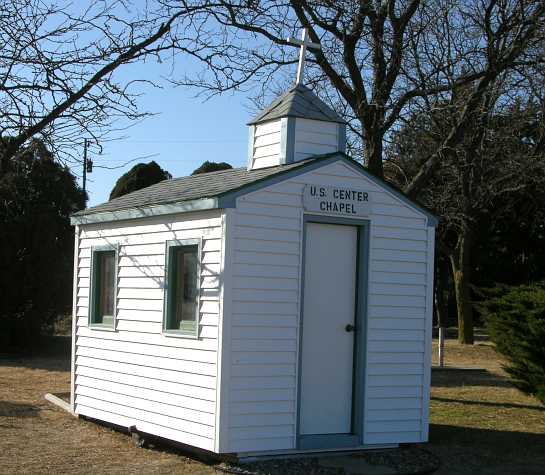
Chapel
This U.S. Geographical Center Chapel was destroyed by a speeding vehicle missing the turn at the T intersection at the end of K-191 Highway on June 1, 2008. It has since been replaced by a new tiny chapel.


Approaching the Geographical Center of the United States on March 23, 2008.

Note: My next posting will be on the geographical center of North America, Europe, Australia and Mexico. Watch for It. Cheers!

Saturday, August 20, 2011

An Excellent Book about Marinduque-Playing with Water


Playing with Water: Passion and Solitude on a Philippine Island (Twentieth Century Lives) James Hamilton-Paterson
I have read this book a few years ago. I have almost forgotten this book, until last week when a fellow blogger from Marinduque posted an article about this book. It triggered pleasant memories of Marinduque. So, if you are a true-blooded Marinduqueno, this is a must read book, even if you do not like to read books. I love this book so much, I read some chapters twice. I am not quite sure where the exact location of the author's cottage was. WHAT baranggay is it in Boac or Gasan? Perhaps other readers could give me a definite answer to my question.

The following two reviews summarizes of what the book is about. But to me, it is one of the best book, I have read about my island Paradise and My Retirement Home-Marinduque. It was written and published in the late 1990's but the lessons one can learn from book is still applicable today.

1. This review is from: Playing with Water: Passion and Solitude on a Philippine Island (Twentieth Century Lives) By schnedermann@msn.com (Munich, Germany),1998.

Paterson is living on a small island in the Philippines and he is joining the natives in diving (i.e. fishing) for a living. We scuba-divers, as we only come for 1-2 week vacations, often are not experiencing the reality around our dive sites. Paterson's book was helping me understanding more of the countries I was visiting. Very instructive are his personal insights about ecology in a third world country and the connections to the economical and social structure. I found it very valuable that the insights do not follow the well known beaten paths about the third world but are rather well founded, personal observations. This makes this book a much more interesting read than any other book about the subject that I have ever read before.

2. Go read...it's good!, September 21, 2002
By A. N. Teodoro III (River Edge, NJ, USA) - (REAL NAME) This review is from: Playing with Water: Passion and Solitude on a Philippine Island (Twentieth Century Lives)
I read this book so many years ago, but I can still remember how good it is. This book is not only about the underwater world but also about the goings-on in a typical barrio in the Philippines. It has a socio-economic aspect to it that I found quite realistic, having been born and raised in that very same third world country. It amazed and pleased me that a foreigner like Hamilton-Paterson could, quite accurately, capture the very essence of filipino rural society---like the old woman who he suspects isn't so aloof and taciturn as she seems and the children of the barrio who frolic in the water and in their humble amusements, oblivious of the shortcomings of a third world upbringing. The book is an unusual stew of underwater
adventure and an unpatronizing account of a life among barrio folk.

Other Reviews:

...a work of such genuine commitment, balanced perception and responsive passion that it will certainly be condemned to become a classic. (New York Times Book Review )

A classic travel book...entirely original: at once astringently and gorgeously written... (Andrew Harvey )

Unforgettable. The Philippine landscape and these remote islanders are crystalline and at the same time mysterious; the writing itself superb. (Ronald Blythe )

James Hamilton-Paterson spends a third of each year on an otherwise uninhabited Philippine island, spear-fishing for survival. Playing with Water tells us why he does. Beyond that, it gives an account of life in that class-bound country as a whole. For it is in places like this rather than Manila of the international news reports that the underlying political and cultural reality of the Philippines may be seen.


About the Author: Described as one of the most reclusive of British literary exiles who shares his time between Austria, Italy and extensive periods over the last 30 years in the Philippines, is poet and novelist, James Hamilton-Paterson.

He is generally known as a commentator on the Philippine scene, where he has lived on and off. His novels on the Philippines includes “Ghosts of Manila”, and “America’s Boy” (1998), the latter setting the Marcos regime into the geopolitical context of the time.

One of his books, “Playing with Water”, sold more than 4 million copies, described in a book review by New York Times as “a work of such genuine commitment, balanced perception and responsive passion that it will certainly be condemned to become a classic.”

Note: This book is available on-line( Amazon) or your local bookstores as well as in your public library.

Related Posts Plugin for WordPress, Blogger...